The Arrest – 21 May 1987 (Thursday)
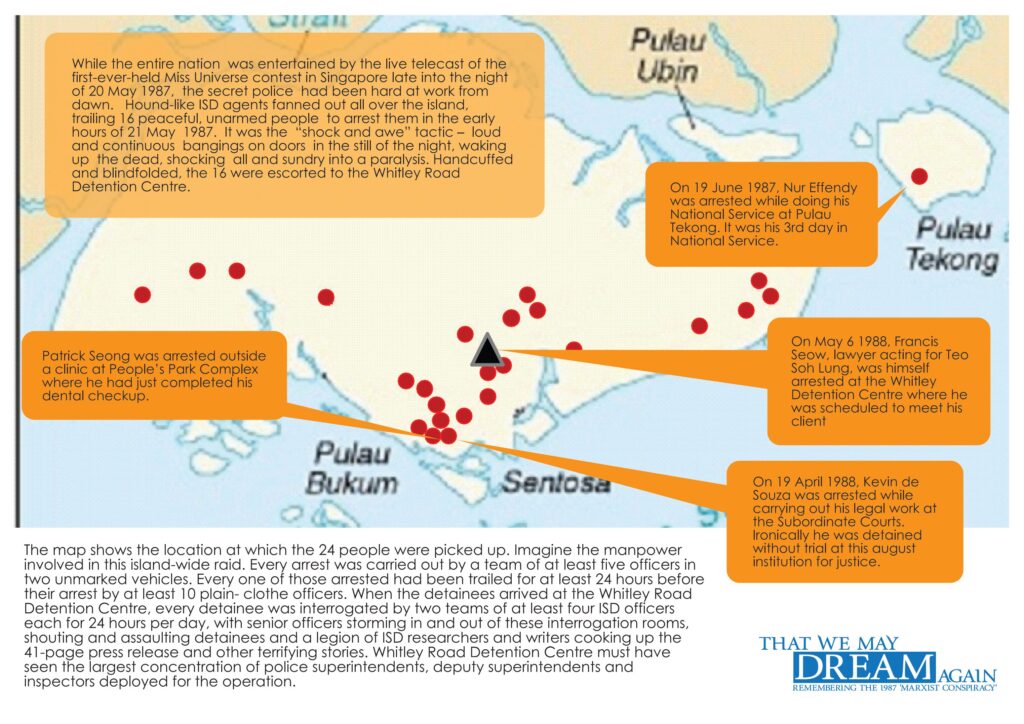
16 people arrested at about 5am under the Internal Security Act (ISA). They were:
- Vincent Cheng Kim Chuan – Church worker 40 years old
- Teo Soh Lung – Lawyer 38
- Kevin de Souza – Church worker 26
- Wong Souk Yee – Research Executive 28
- Tang Lay Lee – Church worker 33
- Ng Bee Leng – Church worker 23
- Jenny Chin Lai Ching – Journalist 29
- Kenneth Tsang Chi Seng – Advertising executive 34
- Chung Lai Mei – Production operator 22
- Mah Lee Lin – Students Union worker 22
- Low Yit Leng – Project manager 28
- Tan Tee Seng – Sales executive 28
- Teresa Lim Li Kok – Publisher 32
- Chia Boon Tai – Businessman 36
- Tay Hong Seng – Subtitling editor 36
- William Yap Hon Ngian – Subtitling editor 40
They were blindfolded, handcuffed and brought to Whitley Detention Centre at Onraet Road, a prison hardly known to Singaporeans. There they were registered, fingerprinted, photographed, medically checked, and given beige-coloured pyjamas to wear minus underwear and accessories including spectacles, wristwatches and footwear. Thereafter, they were brought to the basement cold-rooms or ground-floor open rooms for interrogation.
Interrogation started in the morning of the first day and continued round the clock for two to three days. When confessions were not forthcoming, harsh tactics were used. Some were made to stand up for long hours, sit unbalanced on chairs with uneven legs; others were slapped and/or beaten, yet others were doused with water while they shivered from the cold. All had to endure deprivation of proper sleep and rest for days.
Meanwhile, family members and friends of the arrested frantically looked for explanations and consolation. It was a time of confusion, disbelief, frustration, worry and grief.
First Week
The next day (22 May 1987), The Straits Times gave a brief report of the arrest. The Government said the arrests were “in connection with investigations into a clandestine communist network.”
The Church, its clergy and the lay organisations met to discuss the arrests, issuing letters and statements expressing confidence in the integrity and motivation of the church workers. Swift responses also came from foreign organisations who together with local organisations like the Law Society and the Workers’ Party called for the 16 persons to be charged or released unconditionally. Some family members of detainees held a press conference to reject the allegations and appeal for release.
Archbishop Gregory Yong met with families of detainees, expressing his concern and support for the Church workers. The Church later issued a press release on behalf of the church organisations involved: “We wish to know if these confessions have been given under any form of duress, coercion, intimidation, threat, fear or inducement.”
Meanwhile in prison, detainees were frantically interrogated to confess to a Marxist plot to overthrow the State. Vincent Cheng was forced to write and sign pages of self-incriminating “facts.” A chart portraying the Marxist network with Tan Wah Piow and Vincent Cheng at its centre was created by the ISD and, according to one detainee, shown to him on the first day of interrogation.
After six days of official silence, the Ministry of Home Affairs (MHA) issued on 26 May 1987 a 16-page statement on the arrests.
The Second Week
After a week of total blackout of both international and local reactions to the arrests, The Straits Times (ST) acted as the official vehicle of MHA’s report of the arrests. For a whole week from 27 May 1987, the ST reported in its front pages the government’s conspiracy theory about how it had uncovered a Marxist plot masterminded by Tan Wah Piow, a political exile in Britain, and operated by Vincent Cheng and his co-conspirators in Singapore, using communist united front tactics, to subvert the Church, the Workers’ Party and the State. Many people reacted to the report with scepticism.
Foreign organisations representing the Church, journalists, lawyers, workers, artistes and NGOs dismissed the government’s allegations, stepped up their opposition to detention without trial and offered solidarity to the detainees.
Families were allowed to briefly see their loved ones in prison for the first time on 27 May. A few detainees could also see their lawyers. The ISD tried to present to the public that the detainees were well-treated and properly cared for. Some detainees were suffering health problems.
The Church continued to pour cold water on the government’s allegations. A solidarity Catholic mass was celebrated on the 27 May evening by the Archbishop and 23 priests at Our Lady of Perpetual Succour Church to pray for the detainees and their families. The church was packed to capacity of 2500 people. Internal security policemen were said to have monitored the celebration.
Next day, the Catholic archbishop and his priests met and released a statement expressing their confidence in the Church’s full-time and volunteer workers and the organisations they worked for. At the weekend, the archbishop released a Pastoral Letter read in all Catholic churches wherein he endorsed the Church’s support for the detained Church’s workers.
Tan Wah Piow, the alleged mastermind of the conspiracy, issued a long and detailed statement in reply to the government’s charges against him. The statement was banned in Singapore. The next day, Tan received in London a registered letter dated 21 May 1987 (the day of the detainees’ arrest) informing him that his citizenship was revoked.
Opposition politicians J.B. Jeyaretnam, Wong Hong Toy and Mohamed Jufrie from the Workers’ Party staged a protest in front of the Istana on 30 May, saying that the Marxist threat was a figment of the Government’s imagination. They were promptly arrested but later released.
The Church’s refusal to accept the government story was criticised by Foreign Minister S. Dhanabalan. The Pastoral Letter of the archbishop had provoked the fury of the government. Relations between the Catholic Church and the government appeared to be on a collision course. Prime Minister Lee Kuan Yew stepped in and wanted a meeting with the Church. Out of a list of 19 names compiled by the Church for the meeting, 3 were axed by Catholic lay leader Mr Ee Peng Liang and 6 axed by the Internal Security Department (ISD). The remaining 9 persons (5 priests, 1 nun, 3 laypersons) were allowed to accompany the Archbishop to meet the Prime Minister at the Istana.
The Istana Meeting – 2 June 1987 (Tuesday)
The Church delegation arrived for the meeting at 2.15pm. They were first given 30 minutes to read the ISD report on Vincent Cheng and his signed hand-written “confessions.” At 3pm the delegation met the Prime Minister who then lectured the Church on the crisis. He first articulated his respect for and the government’s good relations with the Catholic Church. Maintaining that the 16 detainees were no threat at all, that Tan Wah Piow was a “simpleton” and Vincent Cheng and the others were “novices” and “do-gooders”, he indicated that he was more concerned about the Church being used by communists who under the cover of religion was destabilising the State, just like in the Philippines. The Archbishop, he said, had not heeded the warning signs given by the MHA to him earlier. In no uncertain terms he said that the government would deal with errant priests, even under the ISA. Here for the first time, the delegation learnt of the four priests identified by the ISD for immediate action. The Prime Minister also warned the Archbishop that if the Church gave cover to the 16 detainees, it would complicate matters.
In response to the lecture by the Prime Minister, the Archbishop said the he was satisfied that the government was not attacking the Church but those who use the Church to subvert the State. Regarding the depositions of Vincent Cheng, the Archbishop was heard to have said: “I will take things on their face value for now”, but these words were not reported in the press or on TV. (Far Eastern Economic Review 17/12/87)
While some members of the delegation felt that the government had a case against Cheng, others saw it as an attack on the Church. Mr Ee Peng Liang who was asked by the Prime Minister (PM) to arrange the meeting, said: “Now the matter is clear. We read the files, the PM briefed us and we are satisfied.” (ST 3/6/87; FEER 17/12/87). The nearly two-hour meeting ended at 4.45pm. But the Archbishop was not prepared for the PM’s next move.
The Archbishop was hauled back for another meeting. Unknown to him, the Secretary to Pope’s Representative based in Bangkok had been flown down and had a meeting with the PM earlier at the Istana. The PM wanted two things: firstly, the Archbishop to come out with a decisive statement without implicating him (PM), and secondly, both the Archbishop and the Secretary to appear before a press conference with the statement. In the circumstances, Archbishop Gregory Yong and Rev. Giovanni D’Aniello said: “We are satisfied that the Government of Singapore has nothing against the Catholic Church when it detained ten of our Church workers amongst the 16 who were arrested for possible involvement in the clandestine Communist network.” (ST 3/6/87).
The Archbishop left for home to meet his awaiting priests, and one of them clearly heard him utter “I was cornered”. (This utterance would become an issue at the PM’s defamation suit against the Far Eastern Economic Review in January 1989).
At the same press conference, the PM said the detainees would not be put on trial: “It is not a practice nor will I allow subversives to get away by insisting that I got to prove everything against them in a court of law or evidence that will stand up to the strict rules of evidence of a court of law…..So long as we know it is true, so long as there has been no torture, no coercion, no distortion of the truth, that we are satisfied, we are prepared to act. But we will not act on concocted evidence.” (ST 3/6/87)
A delegation of family members of the church detainees met with the Archbishop at 8pm to look for his support in these trying times. By now, after the experience earlier at the Istana, the Archbishop was starting to waver. He wanted to disengage the Church from supporting the detainees and to be non-committal. The family members felt betrayed and reacted with disgust and bitterness.
Then at 9pm, the television news broadcasted that, on the basis of the documentary evidence presented to him which he had no way of disproving, the Archbishop accepted the Government’s allegation that Vincent Cheng was a key figure in a Marxist plot to subvert the state. The next day’s (3 June) Straits Times splashed its front page headline with: “Archbishop accepts evidence.” For several days thereafter, extensive pages were devoted to show how Cheng used the Church as a cover for his subversive activities, and how there was no conflict between the Catholic Church and the government.
The Third Week
From then on things happened in quick succession. The attacks of the government were now aimed at the four priests who from the beginning of the arrests had regrouped into a committee of co-ordination: Fr. Joseph Ho (chairman of the Justice and Peace Commission), Fr. Edgar D’Souza (assistant editor of The Catholic News), Fr. Patrick Goh (national chaplain of the Young Christian Workers), and Fr. Guillaume Arotcarena (director of the Catholic Centre for Foreign Workers). After being briefed by the delegation on the Istana meeting, the priests realised that the PM’s will was not so much the prolongation of the detention of the 16 as the elimination of the four priests. To diffuse the situation, the four priests decided to tender their resignation from the organisations they served. The Archbishop accepted the resignations and gave a press conference about it, expressing his hope that the affair was now nearing its conclusion. He also banned the forthcoming issue of the Catholic News which highlighted the arrested church workers. The Archbishop’s hope was dashed when word came from the Church’s Vicar General that the ISD wanted more than resignation. They wanted ecclesiastical sanctions on the four priests, and the Archbishop gave in by “suspending the four priests from preaching and from having anything to do with the organisations they were once in charge of.” (ST 6/6/87). One by one, the four priests left the country.
Heeding the government’s warnings and trying to make good his pledge at the Istana meeting to put his house in order, Archbishop Yong began the big turnaround. The Justice and Peace Commission was shelved, the Catholic Centre for Foreign Workers was closed down, the Catholic social movements were to be monitored more closely, the Catholic News would return to a more “religious” spirit, priests and religious were instructed to keep religion and politics apart especially in their sermons, and intercessory prayers for the detainees prohibited in worship sessions.
On 6 June, 16 family members and friends of detainees wrote to Pope John Paul II describing how the local Church’s initial support evaporated overnight, how the Archbishop did not questioned the means by which signed depositions were obtained, and how he prohibited intercessory prayers for detainees in masses.
Despite the subservience of the local church, fellow Catholic churches around the world were not so accommodating. The Australian Catholic Church had made its support of the 16 by political action and prayer sessions. Archbishop Soter Fernandez and Bishop Selvanayagam of Malaysia called on the government to try the 16, saying: “In view of the recent press release from Singapore concerning the deposition of Vincent Cheng, we insist all the more that the evidence be brought to an open court.” 120 national Catholic organisations meeting in Rome sent a telegram to the PM requesting immediate release of the 16 pending due process of law and justice.
J.B. Jeyaretnam, Secretary-general of the Workers’ Party held a press conference, demanding that the government release the detainees. He said that the fact that the government would not take them to court proved there was no evidence against them.
Local scepticism of the government’s story continued despite its detailed Report carried in The Straits Times and other local media. The government embarked on its next step – television confessions. Vincent Cheng was the first to be pressured to do so. His confession, rehearsed and pre-recorded, was aired on 9 June on prime-time television (78 minutes).
International Reactions
Now that the government had achieved the goal of getting the Church to toe the line, it had to fight another battle. The international response to the detentions was antagonistic and persistent. Many organisations and concerned individuals wrote to the government or the families of the detainees, demanding genuine legal redress and immediate release. The government found it difficult to overcome or tame them. The international organisations wanted precise answers to their inquiries. Some went further to carry out protest demonstrations at Singapore embassies or corporations such as Singapore Airlines.
The foreign media was undaunted. Major publications such as Far Eastern Economic Review, Asiaweek, Asian Wall Street Journal, The Age, and The Star raised more questions than answers regarding the alleged Marxist Conspiracy.
In Malaysia, Singapore’s closest neighbour, many sessions were organised to inquire into the truth of the government’s allegations and to offer solidarity. Besides the Church, other secular groups also made statements. One group comprising 14 organisations and calling itself “Human Rights Support Group for the Singapore 16” called on the Singapore government to release the detainees or bring them to court. The same call was made by “The Penang Support Group for the Singapore Detainees.”
The Malayan Trade Union Congress Youth Section wrote to the Singapore government: “We are against the concept of detention without trial. All are innocent till proven guilty.”
A research group called Institute of Social Analysis (Malaysia) organised a forum on 10 June, with speakers from Aliran, Malayan Bar Council, and Malaysian Social Science Association. The forum declared its opposition to confessions obtained under torture and duress, and thus refused to accept such confessions of the 16 detainees.
Amnesty International began their inquiry. A delegation went to Singapore to investigate and work on the case from 14-21 June 1987. On their return, on 26 June, Amnesty adopted 12 of the detainees as prisoners of conscience. It also produced a document on the case, arguing against the use of harsh treatment and coercion in continuous interrogation.
Three organisations: International Commission of Jurists (Geneva), International Federation of Human Rights (Paris) and Asian Commission of Human Rights (Hong Kong) formed a delegation called International Mission of Jurists to Singapore and came to inspect the case from 5-7 July 1987. They published a file on the affair, registering the reactions of more than 200 organisations including Asia Watch (USA), Korean Human Rights Committee, Justice and Peace Commissions of different countries, etc. They made a detailed study of Vincent Cheng’s TV confession and noted that at no time in the interview did Cheng admit his participation in a Marxist plot or an eventual recourse to violence.
47 law academics in New Zealand issued an open letter condemning the action of the Singapore government. In Japan, the Kansai Emergency Committee on Human Rights in Singapore, comprising church and community leaders, lawyers and academics said that the Singapore government’s charges were “ridiculous and cynical slanders.”
Political groups of the highest order also intervened. 10 members of the US Congress wrote to Minister of Home Affairs on 15 June, challenging the illegal use of coerced confessions and calling for legal procedures to begin. On 4 July, another 55 US Congressmen, including several presidents of commissions, said the same in a letter. At a meeting on 19 June, the Ministers of Foreign Affairs of USA, Canada, New Zealand and Australia despatched a letter to their Singapore counterpart, demanding for an explanation of the affair. 15 deputies of the Japanese Diet also signed a letter to PM Lee Kuan Yew. The European Parliament passed a resolution on 17 June, calling on the Singapore government to review the cases of the 16 immediately.
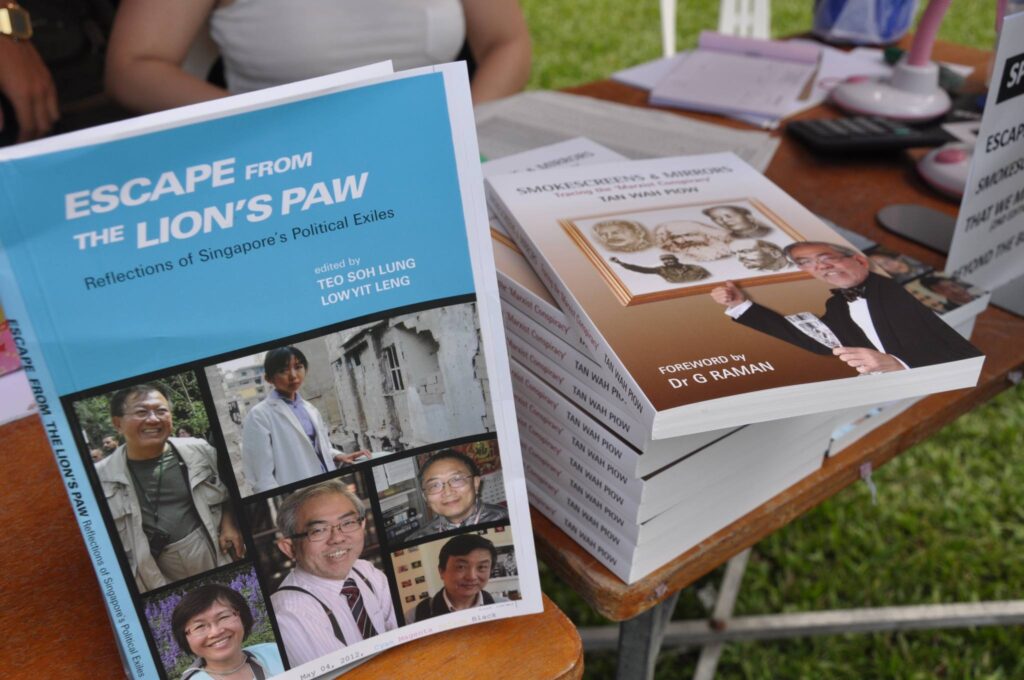
On 17 June, Tan Wah Piow launched his book Let The People Judge: Confessions of the Most Wanted Person in Singapore in London. In a press release, he said that “the government has fabricated the communist conspiracy…for partisan ends.” He is ready to “be publicly interrogated by its officials in a neutral place, in the presence of independent observers from the media, church, law society and academic institutions.”
The First Releases and New Arrests
On 19 June, the government issued its first order on the detainees following a month of interrogation. Vincent Cheng was served a detention order for two years, and 11 others for one year. Four (Ng Bee Leng, Mah Lee Lin, Tang Lay Lee, Jenny Chin) were released the next day (20 June). Except for Jenny who was released without conditions, the other three had restrictions on leaving the country, on taking part in any activities or be members of any groups which could be used for Marxist or communist propaganda.
The next day, 20 June, the government arrested six more people. They were:
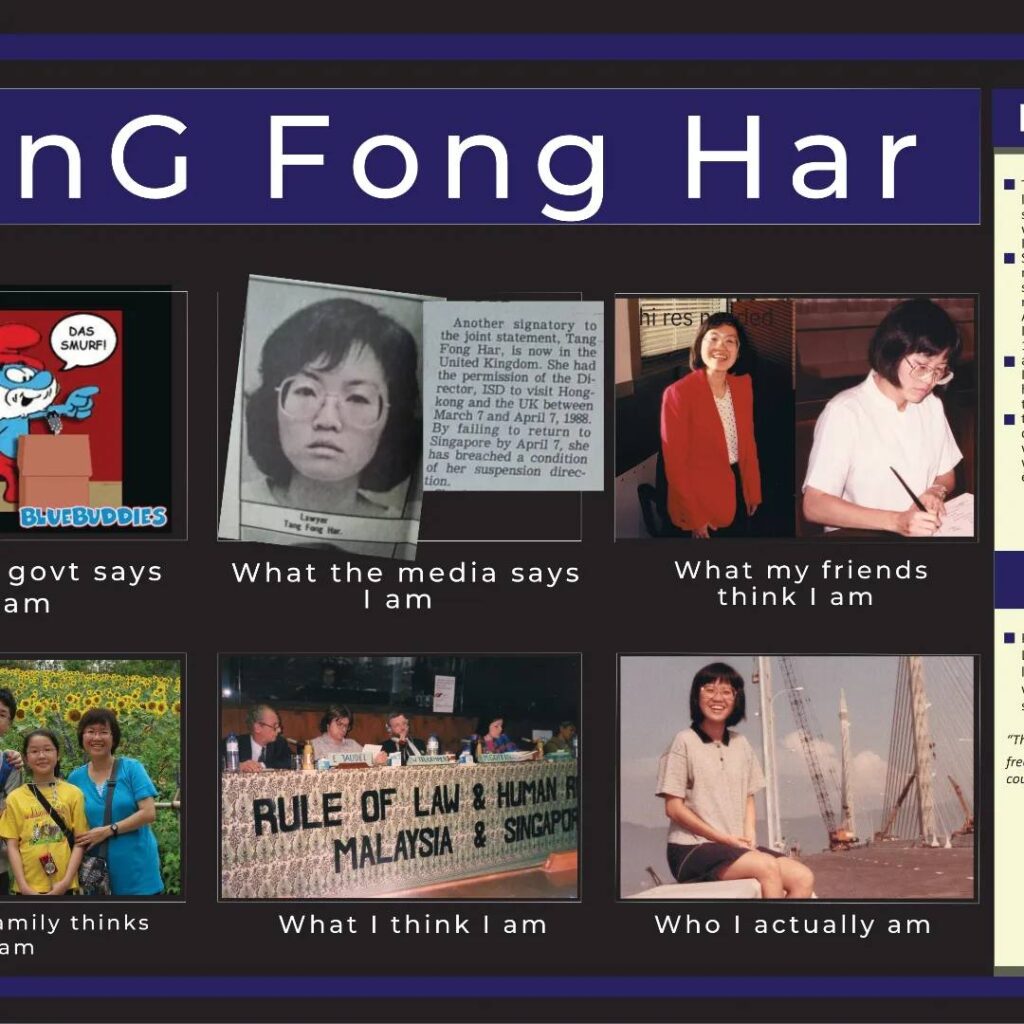
- Tang Fong Har – Lawyer 31 years old
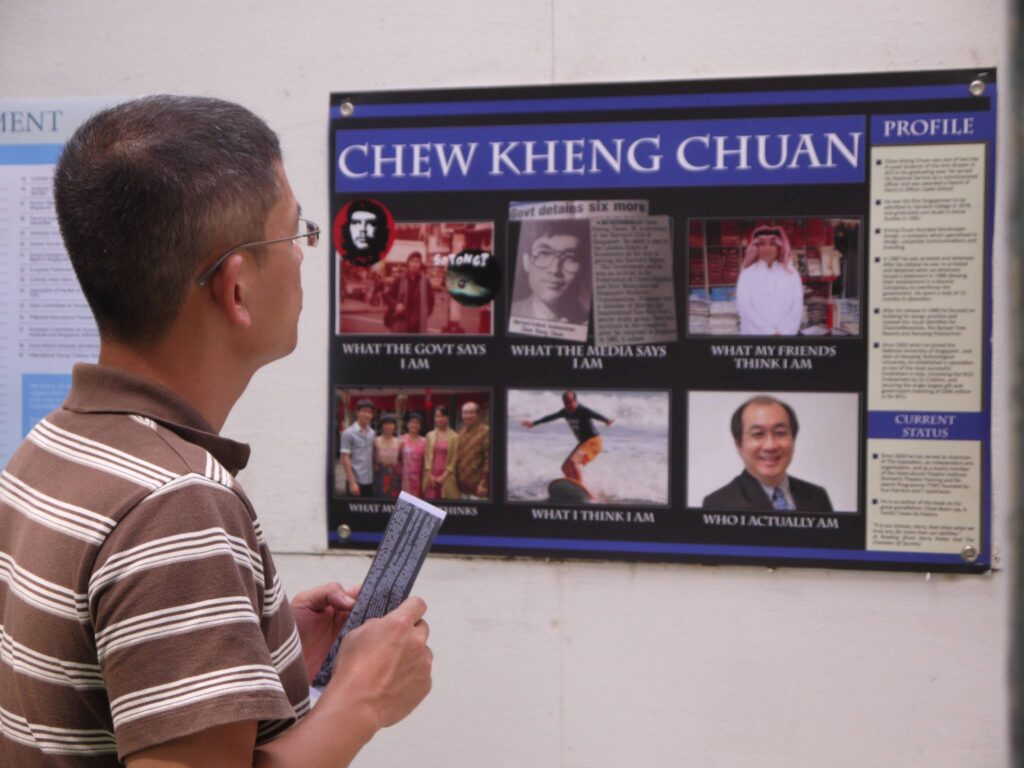
- Chew Kheng Chuan – Businessman 29
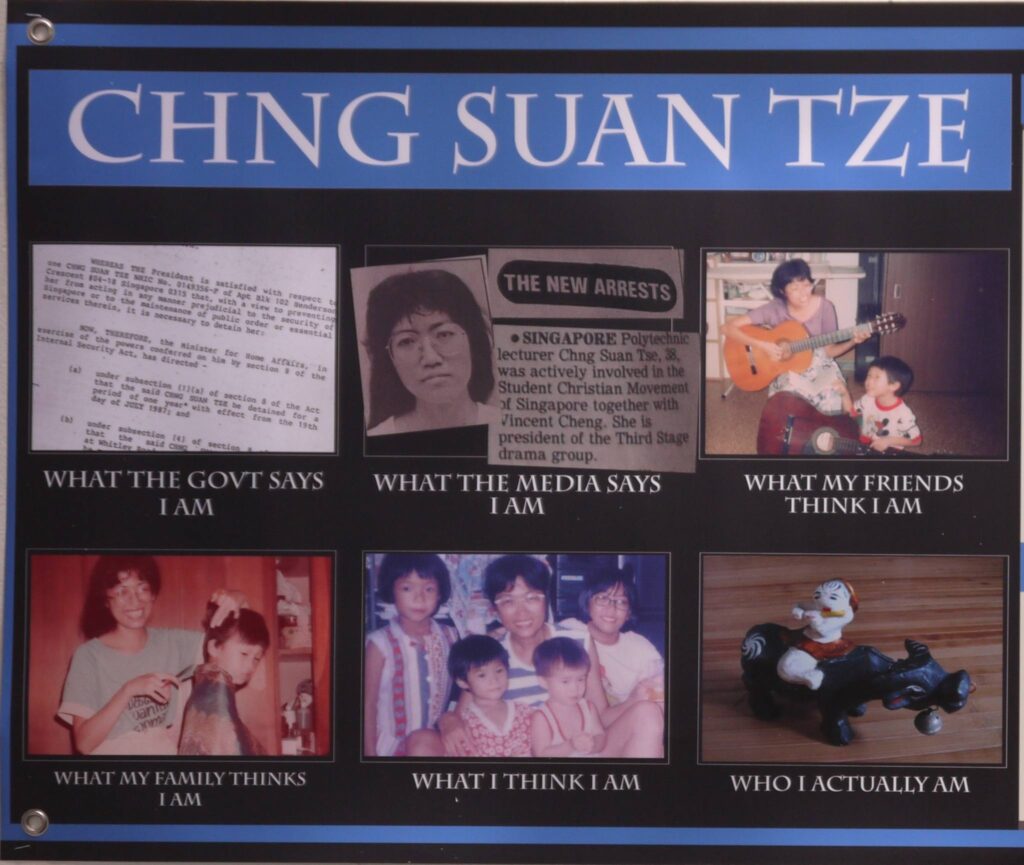
- Chng Suan Tze – Lecturer 38
- Ronnie Ng Soon Hiang – Student 22
- Fan Wan Peng – Student 18
- Nur Effendi Sahid – National Serviceman 21
The arrests of three persons associated with the Singapore Polytechnic Students’ Union (SPSU) were deemed necessary following the actions taken by its leadership. On 6 June, acting president Fan Wan Peng, in a letter to Minister Jayakumar, denied that SPSU was ever infiltrated by Marxist elements and called for the 16 to be released or charged in court.
Following the arrests of SPSU’s president and secretary-general, members resigned in fear and the new leadership agreed to toe the government’s line. SPSU was the last vocal students’ union to be repressed.
The Sixth Week
International reactions to the arrest of the 22 remained defiant and unconvinced about the government’s explanations. Doubts were also being raised among Singaporeans.
On 24 June, former President of Singapore, Devan Nair delivered a scathing attack on Lee Kuan Yew and his government in an address to graduates of the National University of Singapore. He said the government, led by Lee, had today adopted an elitist political style that belittled the ordinary man and aimed to stifle open debate in public life. “If people do not appear willing to respond (to open debate on issues), it is because the government is known to react like a scalded polecat to even mild criticism”. In attempting to “maximise popular support through monopoly over the formation of public opinion”, the government was creating disquiet and disenchantment. (ST 26/6/87)
Minister of Foreign Affairs, S. Rajaratnam gave a dire warning on 26 June about the worldwide “hybrid beast” of communism, racialism and religious fanaticism that had now attacked Singapore. He explained how liberation theology was communism in clerical clothes, infecting countries such as the Philippines.
Because Cheng’s televised confession was not wholeheartedly received by the public, the government wanted a more sophisticated programme to be produced. Presented like a documentary, “Tracing the Conspiracy” was shown in two parts on 28 and 29 June 1987. It tried to bring together all the confessions of the detainees into a unified story as one of a long history of communist struggles with the PAP government. The central figure was Tan Wah Piow and around him were the various organisations and individuals who were preparing the ground for his return to Singapore to create a Marxist state.
July 1987
After six weeks, the government was still unable to stop and silence the questions arising from the detentions. The thorn in its side was the USA. On 2 July, two prominent government figures, namely Tommy Koh and S. Jayakumar had to reply to questions filed two weeks earlier on 15 June in an attempt to conclude foreign investigations into the detentions.
Singapore’s Ambassador to the USA, Mr Tommy Koh rebutted a Washington Post report on 15 June which accused PM Lee Kuan Yew of “intolerance of almost any form of dissent against his rule.” He said the report contained errors and omissions, arguing that Vincent Cheng had already confessed to the allegations, there was no evidence of torture or ill-treatment, the Catholic Church had accepted the government’s story, the ISD had uncovered Tan Wah Piow as the mastermind, and the Singapore Constitution expressly provided for preventive detention. To opponents who have campaigned against the ISA in general elections, he said: “Each time the electorate has given the government their overwhelming mandate.” (ST 2/7/87)
The Home Affairs Minister, S. Jayakumar wrote in reply to a group of 10 US Congressmen who questioned the legality of the public confessions of the detainees deprived of a trial. His arguments echoed much of what Tommy Koh said, relating how the British introduced detention without trial and how preventive detention had ensured economic prosperity and political freedom to Singapore. He ended by claiming that Singapore was a sovereign nation with its own rules of governance and would not bow to American values and experience.
On 5 July, in a speech at his People’s Action Party (PAP) Youth Wing seminar, Jayakumar revealed that Wah Piow was not the mastermind of the Marxist conspiracy, that he was being manipulated by others more sinister and cunning, that he was but “a puppet in a deadly game.” He said the government was now encountering a new tactic of the communists. “This time, they did not want it to be seen as a clash between government and communists, but as a clash between Church and State.” (ST 6/7/87). Regarding foreign reports of torture on detainees, he said: “We don’t do these illegal acts and expect to get away with it. Just can’t be done. And we don’t do it…. It’s really not necessary to resort to these illegal and arbitrary acts of torture.” (ST 8/7/87)
This first modification of the identity of the mastermind showed cracks in the government theory. Jayakumar had to confess that many questions were still left unanswered. The conviction expressed in his first press communiqué in May was now in tatters. To stem the tide of doubt, the government embarked on another television confession exercise on 19 July, this time making use of Chew Kheng Chuan, Tang Fong Har and Chng Suan Tze to confess to activities that support the communist cause. The three had been served with detention order for one year while the three student leaders were released on 18 July with restrictions. The focus now was to emphasise the threat of communism in Singapore, and the Minister to propagate it was none other than BG Lee Hsien Loong (PM Lee’s son and rising star of the younger leadership).
Using the television as his medium of instruction on 20 July, BG Lee said in a dialogue with community leaders, that the arrests were not an attempt to suppress the opposition or to strike “white terror” among the people. “The government’s position is clear. Anyone, who is unhappy with government policies or believes he has a better policy, can form his own political party and oppose the government openly.” But the government would not condone clandestine activities under the cover of religion to promote the communist cause. He maintained that “the communist threat is still present though it has changed its form. It has not been eradicated and will not be eradicated…. The threat is not just from the Communist Party of Malaya (CPM) now…The sources of influence are the euro-communists, the extreme leftist Trotskyists…. There is also the influence from the Philippines. Though it is a Catholic nation, the Church is infiltrated by leftist elements.” The communist goal of a classless society was an “illusion.” There was a need to prevent young idealistic Singaporeans from being influenced but overseas-educated Singaporeans posed a problem. BG Lee gave three reasons why the ISA was needed to fight the communists: the clandestine nature of communist activities made it difficult to obtain evidence in a normal court procedure; witnesses faced threat of assassination; open trial would allow more publicity to extremists. (ST 20/7/87)
110 concerned Christians signed a letter dated 23/7/87 addressed to Archbishop Gregory Yong and copied to the priests and religious of the Singapore Catholic Church. They criticised the bishop and his priests for failing “to stand by those who are being persecuted for showing concern for the poor and marginalised …Your actions have robbed the Church of credibility in the eyes of everyone.” They reminded the bishop: “As leader of the Church, we would expect you to first verify for yourself the veracity of the actions of those detained before accepting the Prime Minister’s allegations…. You have placed yourself on the side of the accusers…. How can the Church preach justice when you have cooperated in the violation of a basic human right?…. You seem to have been more concerned in preserving the structure of the Church than the people who were prophetic enough to interpret the Gospels in concrete action…. You compromised Jesus Christ’s solidarity with the poor and the oppressed. You compromised the Kingdom values of Justice, Peace, Fellowship and Love”. They concluded by telling the Bishop: “However, it is not too late because the issue remains unresolved. You can still demand a fair trial in open court for all those detained and uphold their innocence unless and until they are proven guilty.”
From the beginning it was PM Lee Kuan Yew and his Minister of Home Affairs who were prominently in the forefront to expose the Marxist conspiracy. The younger leaders in the Cabinet deferred, in silence. In Parliament on 29 July, Goh Chok Tong, the First Deputy PM spoke for the first time on the arrests. He revealed that he and the younger leaders jointly decided to use the ISA on the detainees after “all of us were satisfied that the 16 were indeed involved in some nefarious activities as reported by the ISD.” Although the ISD advised immediate action, the younger ministers did consider various reasons for delayed action. But they finally decided to act swiftly. “The compelling reason for moving against them now is this. Communist cells are like cancer cells. They multiply very quickly and infect other healthy parts of the body. If we do not destroy them now, they will destroy us later.” (ST 30/7/87)
Earlier, the lone opposition member in Parliament, Mr Chiam See Tong had proposed a motion calling for the immediate release of the remaining 15 detainees, and spoke one hour on the issue. Amidst jeers and interruptions by the other MPs, he said that the PAP had a track record for “over-exaggerating” the threats to Singapore and being melodramatic about them. The “scare tactics” of the 50s and 60s would not work today. He argued that the government failed to prove its case against the 15 whose only “crime” was that they were against the PAP. “They are young idealists and intellectuals. They are like you and me…There is no valid reason to detain them for even one more day.” After all, the government had extracted “all the political benefits” it could from the arrests. The government was so certain earlier that the mastermind of the conspiracy was Tan Wah Piow, and now it was touted to be “unseen hands”. If the government was pointing fingers at the CPM, the government should remember that the CPM was “now in shambles” and did not pose a threat to Singapore. “Where is the danger posed by those arrested?” he asked. His motion was shot down. (ST 30/7/87)
Minister Jayakumar countered Chiam’s proposition. He said the detainees were not harmless, innocent people. The CPM network still exists in Singapore, he claimed, Singapore is vulnerable to foreign influences. He added that Vincent Cheng and others in his group were exposed to Filipino communism: “We know that religious organisations were being captured by the communists. We know that sooner or later it was going to affect Singapore and other countries. It happened sooner than we thought.” (ST 30/7/87)
Meanwhile in prison, the detainees were transferred from the tiny 6 x 10 feet cell to share the bigger cells with one or two other detainees. Two-day old Straits Times newspapers were allowed for reading, so were books brought in by family members at the weekly visits and vetted by the ISD. The Catholic detainees were allowed a weekly half-hour worship session with the prison chaplain. Some detainees acted on their right to make legal representations to the Advisory Board against the wishes of the ISD while a few others considered further legal action of habeas corpus at the courts.
August 1987
After the warnings and explanations of the past month, the government would thenceforward press ahead with its stamp of control over the power of religion.
At the eve of National Day broadcast on 8 August, PM Lee devoted the second half of his speech to the issue of religion and politics. Using the Catholic Church and its response to the Marxist conspiracy as an example, he said: “I had always considered the Catholic Church a natural ally against the communists with their anti-God ideology. After this experience, I do not expect the Catholic Church to allow any Catholic priest or Catholic lay worker again to make use of the Church or para-church organisations for political ends. I expect that to be the case with other Christian denominations and indeed with all other religions.” He added that the government was “completely neutral between different religions,” and the existing religious harmony must not be threatened by the mixing of religion and politics. Otherwise a clash of political views could easily turn into a clash of religious beliefs. (ST 9/8/87)
At his National Day Rally Speech on 16 August, PM Lee again devoted part of the speech to repeat his warning to religion to stay in its own domain. He said that Catholic priests and Christian pastors who returned from studies overseas where the Church was a political force should harbour no illusion about going beyond religious activities into “social action”. “Once religion crosses the line and goes into what they call social action, liberation theology, then we are opening up Pandora’s Box in Singapore”. He added that there was always the danger that if one religion did that (mixing religion and politics), others would not want to be outdone, thereby dismembering our multi-religious community. He issued a warning to religious leaders: “Churchmen, lay preachers, priests, monks, Muslim theologians – all those who claim divine sanction or holy insights – take off your clerical robes before you take on anything economic or political…Take it off. Come out as a citizen or join a political party, and it is your right to belabour the Government…But you use a church or a religious publication and your pulpit for these purposes and there will be serious repercussions.” (ST 17/8/87)
On 14 August, S Rajaratnam, Minister of Foreign Affairs and PAP ideologue, gave a religious speech entitled “Is God a Liberation Theologian?” at a NUS Student Forum. This speech was a development of the advice PM Lee gave to the Church to stay in its own domain. Quoting liberation theologians out of context here and there, Rajaratnam belaboured his belief that liberation theology was Marxism spoken in a theological language. He said that “liberation theology has nothing to do with God but with politicised priests, ambitious bishops and smart communists” who needed a new explanation to their efforts to destabilise the world. He compared them to “an expendable army of useful idiots” flocking to join the communist crusade. This recent plot, he propounded, was only the first of many more to come in the region. (ST 15, 20/8/87)
Citing his disdain for westerners who on the basis of human rights supported “disguised Marxists”, Rajaratnam also revealed that the Government had so far received some 400 telegrams from western countries protesting against the recent arrests. Among them was a letter signed by the chairman of the US House of Representatives Foreign Affairs Committee and 54 other congressmen from both the Republican and Democratic parties, urging that the detainees either be tried promptly or released. The copy of the letter was released by Asia Watch, a Washington-based human rights organisation, and the Straits Times reported it on 21 August 1987.
September 1987
Unexpectedly, the government began to release several detainees who were slated for one-year detention. The Home Affairs Ministry said the government was satisfied they were unlikely to resume subversive activities and become a security threat. The first two to be released on 12 September were Chew Kheng Chuan and Tang Fong Har. Two weeks later, on 26 September, seven more were released: Teo Soh Lung, Wong Souk Yee, Kevin de Souza, Tan Tee Seng, Low Yit Leng, Chung Lai Mei, and Chng Suan Tze. All of them had the usual restrictions upon release.
October 1987
The foreign press was a thorn in the government’s side. Asiaweek, the Hong Kong-based weekly news magazine refused to publish in full the government’s replies to its reports on the arrests. The government thereby accused it of engaging in the domestic politics of Singapore and restricted its circulation in Singapore to 500 copies from the 10,000 copies regularly sold.
The government was indeed concerned about the four priests identified by PM Lee at the Istana meeting as the real troublemakers. The Straits Times published in mid-October their current whereabouts, particularly of Fr. Edgar D’Souza who had fled to Australia.
Amidst the concerns generated by Operation Spectrum in Singapore, citizens were further inundated with news of a similar ISA exercise in Malaysia, codenamed Operation Lalang, on 27 October 1987. 106 persons including politicians, educationists and social activists were arrested by the Mahathir government.
November and December 1987
Fr. de Souza’s relationship with a woman was to become for the following months the premier subject of the government to justify its case. Why it did so with such vehemence came from its claim that Fr. de Souza was conducting an overseas campaign for the detainees. November and December saw long statements and counter-statements from the government, the Church and Fr. de Souza himself. In mid-December Fr. de Souza announced his resignation from the priesthood.
Meantime, the remaining 6 detainees in prison were left in limbo as to their date of release. Then on 20 December, 5 were released at 3pm. They were William Yap Hon Ngian, Kenneth Tsang, Teresa Lim Li Kok, Chia Boon Tai and Tay Hong Seng. Only Vincent Cheng remained in detention, being the only detainee in the whole prison.
Not all was quiet on the news front either. The Far Eastern Economic Review, another Hong Kong-based weekly news magazine, in its Dec 17 issue, made allegations of Church-Government tensions in its article entitled “New Light on Detentions”. It claimed that the article was based on recent statements made by Fr. De Souza. The government decided on 26 December to restrict the FEER to 500 copies per issue in Singapore. PM Lee, through his lawyers, Lee & Lee, also demanded an apology, retraction of the allegations and damages.
The Re-Arrest – 19 April 1988
On 18 April 1988, 9 of the 22 people arrested last year issued a joint statement, denying their ever being involved in a Marxist conspiracy against the state and revealing that they were harshly treated during detention and coerced into confessing on television. The 9 were: Teo Soh Lung, Tang Lay Lee, Kevin de Souza, Kenneth Tsang, Wong Souk Yee, Chng Suan Tze, William Yap Hon Ngian, Ng Bee Leng and Tang Fong Har.
The next day, 19 April, eight of the nine signatories were re-arrested. Tang Fong Har missed arrest as she was in Britain. Lawyer for some of the detainees, Patrick Seong Kwok Kei, 34, was also arrested. The government justified the re-arrest in a statement that it is extremely likely that the ex-detainees would return to conspiring to overthrow the state. It claimed the government had new evidence to show the involvement of the Communist Party of Malaya in the conspiracy. The government also announced that a Commission of Inquiry would be heldto look into allegations made in the statement.
The Singapore Democratic Party and the Workers Party condemned the re-arrest and called for a Commission of Inquiry to look into the allegations by the detainees. Overseas organisations such as Amnesty International and the Australian Catholic Bishops’ Committee for Justice, Development and Peace also called into question the use of the ISA to inflict human rights abuses and torture.
The re-arrested detainees were subjected to unduly harsh psychological duress, with long hours of interrogation in cold rooms and sleeping in claustrophobic cells. The ISD was now inclined to refrain from physical torture. The prison doctor would examine each detainee before and after interrogation. Finally, all detainees (including those who didn’t participate in signing the statement) were required to sign a statutory declaration to admit to the non-existence of ill-treatment in detention and the lack of coercion in interrogation. This new tactic gave the government justification to announce on 28 April that a Commission of Inquiry was no longer needed. The statutory declaration would also inhibit detainees from future attempts to expose ill-treatment or coercion.
May 1988
Unlike in the first arrest, detainees were now agitated towards legal action. On 6 May, the Court adjourned hearing of applications for writs of habeas corpus by Ng Bee Leng, Tang Lay Lee, Kevin de Souza, Wong Souk Yee, Chng Suan Tze, Teo Soh Lung and Patrick Seong. William Yap withdrew his application.
On 6 May, Francis Seow Tiang Siew, 59, the lawyer for Teo Soh Lung and Patrick Seong, was arrested when he came to visit his clients at the Detention Centre. The next day, the Government declared that Seow was arrested for questionable activities with US diplomat, E. Mason Hendrickson. It claimed that Hendrickson had met with anti-government lawyers “to manipulate and instigate Singaporeans, in order to bring about a particular political outcome”. Hendrickson was expelled by the government on 7 May for meddling in local politics; in retaliation, the US government expelled a similarly ranked official of the Singapore Embassy.
On 8 May, Chew Kheng Chuan was re-arrested for helping to draft and distribute the public statement of the detainees. With the arrest of several lawyers and the fears facing other lawyers, detainees had to resort to hiring Queen’s Counsels to represent them.
On 18 May, Justice Lai Kew Chai heard and dismissed applications for writs of habeas corpus by Tang Lay Lee and Ng Bee Leng who were both represented by QC Geoffrey Robertson. On 19 May, both were released with Restriction Orders. Patrick Seong was also released but unconditionally.
On 25 May, Justice Lai Kew Chai heard and reserved judgment on the application for writs of habeas corpus by Kevin de Souza, Wong Souk Yee and Chng Suan Tze. Their lawyer, QC Geoffrey Robertson challenged the validity of the re-arrests on the grounds that the Minister had acted irrationally and in bad faith and also that he had exceeded the powers given him by the ISA. Senior State Counsel S. Tiwari, representing the Home Affairs Minister, the Commissioner of Police and the Attorney-General, contended that the grounds for detaining anybody under the ISA could not be reviewed by the courts because the decision to detain rested solely with the Home Affairs Minister. (ST 28/5/88)
On 27 May, Justice Lai delivered judgment and dismissed their applications.
In parliament, opposition MP Chiam See Tong moved an amendment calling for a rejection of the government’s recent action against the detainees, US government and foreign interest groups, and calling upon the government for more openness and tolerance of legitimate pressure groups. On 27 May, PM Lee gave a lengthy reply to Chiam, justifying the ISA and detention without trial to contain the communists, why he had to step in the Catholic Church’s management of the affair, and why the ISD was Singapore’s greatest asset. He said that the PAP government was not ashamed of what it had done in the Marxist conspiracy and Hendrickson affair.
In Hong Kong, former President Devan Nair called on PM Lee to step down. “All old men develop obsessions,” he said, referring to Lee’s strong concerns with security and law and order in Singapore. “These are the obsessions of an old man. He thinks he’s indispensable.” (ST 29/5/88)
Meanwhile, Archbishop Gregory Yong acted to stop all parish religious services that had been conducted weekly for the detainees.
June – November 1988
During the following months, detainees were busy taking legal actions to secure their release while the government was kept busy on the issue of the forthcoming general elections. On 9 June, representations to the Advisory Board were made by Vincent Cheng, Teo Soh Lung, Kenneth Tsang, Wong Souk Yee, Kevin de Souza, William Yap, Chng Suan Tze and Chew Kheng Chuan.
Surprisingly, on 19 June, William Yap was released on Restriction Order while Teo Soh Lung, Kenneth Tsang, Wong Souk Yee and Kevin de Souza on 20 June had their Detention Order extended for another year. Chng Suan Tze and Chew Kheng Chuan also had their Detention Order extended for one year on 19 July.
From 27-30 June, Teo Soh Lung, represented by QC Anthony Lester, had her habeas corpus case heard before Justice Lai Kew Chai. The court was attended by international observers and many plainclothes police. QC Lester made it known to the court that if he failed to persuade the court to depart from the existing local case law which accepted the Executive as the sole judge in preventive detention cases, Teo would pursue the case to the Privy Council. After the 4-day hearing, Justice Lai reserved judgment.
On 2 August, he dismissed her application. Teo appealed and the case was heard from 26-29 September before Chief Justice Wee Chong Jin, Justice L.P.Thean and Justice Chan Sek Keong. She was again represented by QC Lester. The Appeal Court reserved judgment.
From 24-25 October, the same Court of Appeal heard the appeal case of Kevin, Souk Yee and Suan Tze. They were represented by QC Geoffrey Robertson.
The Appeal Court also reserved judgment.
On the other side of the spectrum, Francis Seow was served with a one-year Detention Order on 5 June. But by 16 July, he was released on a Suspension Direction with Restrictions. He had been incarcerated for 72 days. In a statement issued after his release, he revealed that “the Government has extended to me an invitation to contest the next General Election. It would be truly churlish not to accept the invitation even though the Government has mined the road there with obstacles and hazards.” He did stand for election under the Workers’ Party platform on 3 September, and lost by only less than 1% of the votes. He was qualified then to take up the post of Non-Constituency Member of Parliament but before he could take his parliamentary seat, he was forced to flee and live in exile in the United States.
8 December 1988
The Appeal Court delivered its landmark judgment on judicial review. After considering recent Privy Council decisions, the Court held that the Judiciary could review whether the Executive’s decision to arrest suspected subversives was reasonable and based on evidence acceptable in court. This landmark judgment altered principles set some 20 years ago that Executive discretion in ISA cases was absolute and beyond judicial review except in procedural matters. (BT 26/1/89). The Appeal Court allowed all four detainees’ appeals on technical grounds. The four detainees were thereby released at the gates of the Detention Centre but were immediately re-arrested and served with new Detention Orders.
All four detainees filed fresh application for writs of habeas corpus. The legal process was started all over again.
January 1989
The PAP government was not pleased with the latest court decision and worked to reverse it. Law Minister Jayakumar said that the government’s powers to deal with subversion could not be based on legal judgments of foreign judiciaries but must be based on Singapore’s context. With its parliamentary majority in Parliament, it sought changes in legislation. On 25 January, Parliament passed amendments to the Singapore Constitution and the Internal Security Act.
The right of appeal to the Privy Council on ISA arrests was abolished. The power of the judiciary to review ISA cases was revoked and restricted to verifying procedural requirements only. The constitutional amendments stipulated that the provisions dealing with special powers against subversion could be interpreted in whatever way laid down by Parliament, even if the interpretation violated the principle that judicial powers lie exclusively with the courts. (ST 7/3/89).The amendments came into effect on 30 January, in time to jeopardise the legal struggles of Teo Soh Lung.
Despite the latest legal changes, Teo Soh Lung, Chng Suan Tze, Wong Souk Yee and Kevin de Souza made representations to the Advisory Board on 28 January. They also applied for writs of habeas corpus to challenge their detention.
February 1989
Kenneth Tsang and Chew Kheng Chuan, both of whom did not pursue legal suits, were released on 20 February on Suspension Direction, with the usual Restrictions. The Home Affairs Ministry issued the statement saying that “they have responded positively to rehabilitation” and “the Government is satisfied that they are unlikely to resume subversive activities and no longer pose a security threat.”
On 24 February, Chng Suan Tze, Wong Souk Yee and Kevin de Souza withdrew their application of writs of habeas corpus. On 11 March, they were released on Suspension Direction, with the usual Restrictions.
March 1989
From 6-9 March, Teo Soh Lung, represented again by QC Anthony Lester, pursued her third attempt at obtaining release. Appearing before Justice F.A. Chua, the QC questioned the recent changes made to the ISA and the Constitution, saying the amendments were made in bad faith and invalid. He warned of grave consequences if there were no implied limitations to Parliament’s power to amend the constitution. He submitted that Teo’s detention was unlawful.
Justice Chua reserved judgment. On 25 April, Court dismissed Teo’s application for writ of habeas corpus. She filed appeal.
On 11 March, The Straits Times reported that QC Anthony Lester had been barred by the Government from working in Singapore on the grounds that he had engaged in Singapore’s domestic politics by commenting overseas that democracy and the independence of the judiciary were being undermined both in Malaysia and in Singapore with regard to ISA.
April 1989
By April, only Teo Soh Lung and Vincent Cheng were still detained at Whitley Centre.
On 22 April, Vincent made his second representation to the Advisory Board.
June 1989
On 20 June, Vincent Cheng and Teo Soh Lung’s Detention Orders were extended for another year.
Kevin de Souza, Kenneth Tsang and Wong Souk Yee’s Suspension Direction expired and were replaced with 2-year Restriction Orders.
Mah Lee Lin’s 1-year Restriction Order lapsed.
On 21 June, Vincent Cheng applied for writ of habeas corpus.
September 1989
On 1 September, Vincent Cheng, represented by lawyer Patrick Seong, made a request to cross-examine the Home Affairs Minister, its Permanent Secretary, the ISD Director and 4 other ISD officers at his forthcoming court hearing. The judge rejected his request in chambers and ordered him to pay costs.
From 11-15 September, Vincent’s habeas corpus writ was heard before Justice Lai Kew Chai. He was represented by QC Michael Beloff who argued that: Vincent was not involved in an anti-government plot, he was practising his Christian faith, no evidence to justify Vincent’s detention, and the recent amendments to the Constitution and ISA were invalid.
The judge reserved judgment.
On 31 January 1990, Vincent’s application for writ of habeas corpus was dismissed with costs.
October 1989
On 2 October, PM Lee made clear his thoughts about the ISA to questions from QC Geoffrey Robertson. He said that no amount of human rights agitation would succeed in pressurising the Government to give up its powers under the Internal Security Act or to release detainees. He reiterated that in ISA cases, the Government was not obliged to give evidence in a court of law. As for the role of the Church, Mr Lee said he had described “in graphic terms” to Archbishop Gregory Yong that if agitation within the Church for the release of the detainees was allowed to go unchecked, it would lead to civil disorder. (ST 3/10/89).
November 1989
From 13-16 November, the Court of Appeal comprising Chief Justice Wee Chong Jin, Justice L.P. Thean and Justice Chan Sek Keong heard the appeal of Teo Soh Lung, represented by QC Lord Alexander. The QC said that if the court disagreed with his submission that the executive could only act within the scope of powers as conferred by Parliament, it must logically follow that the government was invested with an ‘arbitrary power’ to arrest and detain, which was not limited in national security purposes. The amendments would then be unconstitutional.
The Appeal court reserved judgment.
On 3 April 1990, the Court dismissed with costs Soh Lung’s fourth attempt to be freed.
June 1990 – Freedom At Last!
On 1 June, Teo Soh Lung was released with Restrictions. Her one-year detention order, due to expire on 19 June, was suspended on the ground that the Government was now satisfied that “she has been rehabilitated enough to be released.”
On 20 June, Vincent Cheng was released with Restrictions. He had to sign 3 conditions before release, namely that he would not promote communism in Singapore, that he would not use religion for politics, and that he would obey six restrictive conditions upon release.
The six restrictions are:
(1) that he shall not travel beyond the limits of Singapore without the prior written approval of the Director, Internal Security Department, Singapore.
(2) that he shall not knowingly associate or be in communication with any person who is currently or has previously been detained under the Internal Security Act of the Federation of Malaya, Malaysia or Singapore, except with members of the Singapore Ex-Political Detainees’ Association, provided he is also a member of such association.
(3) that he shall not knowingly associate or be in communication with any person who is connected with Marxist or communist organisations or their front organisations, or any organisation implicated in the Marxist conspiracy as enumerated in the MHA press statement of 26 May 87.
(4) that he shall not issue public statements, address public meetings, or print, publish, distribute or contribute to any publication without the prior written consent of the Director, Internal Security Department, Singapore.
(5) that he shall not hold office in, or take part, or in any way assist in the activities of or act as adviser to, or be a member of any organisation, association, or group without the prior written consent of the Director, Internal Security Department, Singapore.
(6) that he shall report to the Internal Security Department on the first working day of every month at a time specified by the Director, Internal Security Department.
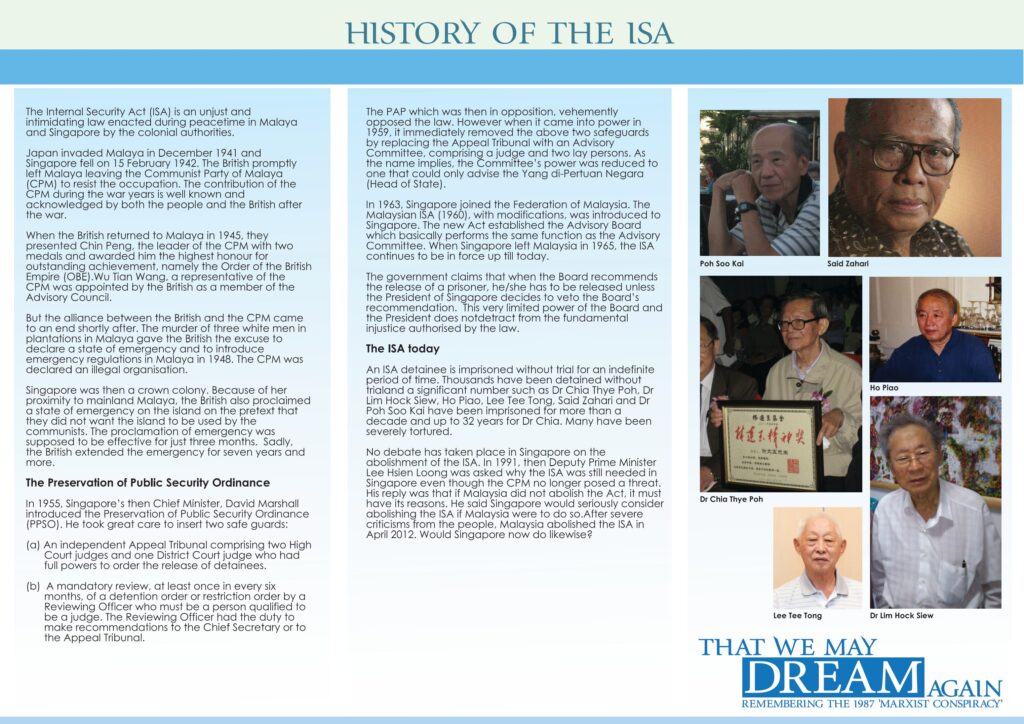
A Suspension Order suspends the operation of a Detention Order, subject to the detainee executing a bond, and subjects him/her to conditions similar to those in a Restriction Order.